Apart from high-quality spawn and appropriate space for mushroom cultivation, careful temperature, humidity, ventilation, cleanness, and moisture control is necessary throughout the process of mushroom farming. Appropriate equipment will assist farmers in controlling those aspects and creating an organized production environment.
For smaller farms, some processes can be done using simple tools. However, commercial and contemporary farms may require special systems that will assist in environmental, water, substrate preparation, and farm management control.
Choosing of equipment according to the type of mushrooms, production scale, and growing methods can optimize the process without making extra expenses.
What Equipment is Necessary in Mushroom Farming?
It depends on the type of mushrooms and the method of cultivation. Basic equipment may include growing racks, humidity control device, ventilation device, temperature control tool, watering tools, cleaning tools, and substrate preparation tool.
Additional equipment for larger farms may include automated environmental control system, air handling system, sterilizer, and monitoring system.
However, the aim is not to buy all machinery that exists. Good equipment should assist in creating stable conditions for growing, avoiding any unnecessary manual labor, providing hygiene, and allowing the growth of production.
Necessary Equipment for Growing Mushrooms
1. Growing Racks and Shelving
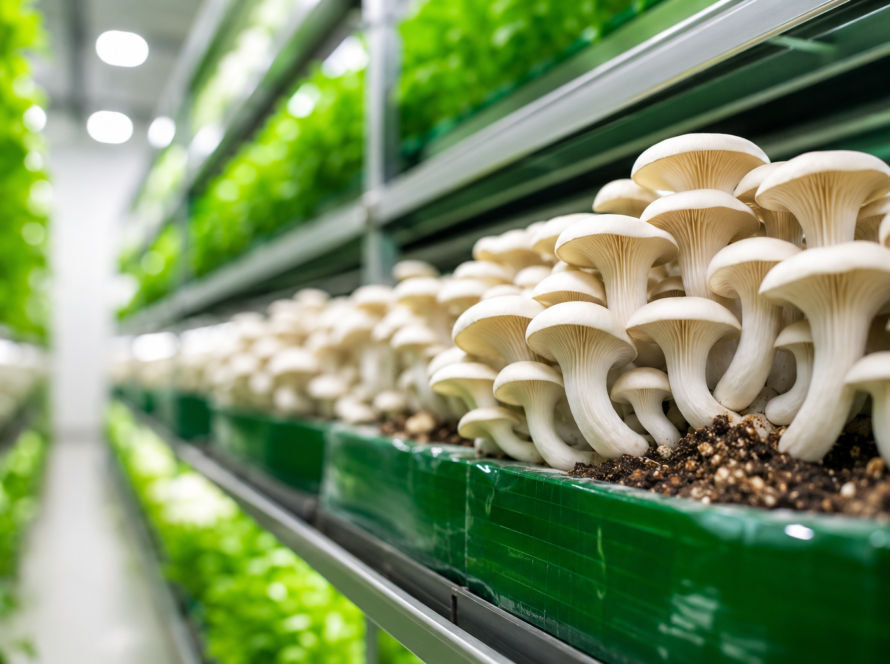
Growing racks enable optimal use of indoor space by facilitating the cultivation of mushrooms in several layers. Tough racks that can be easily cleaned are especially helpful in growing bags, trays, or containers.
Water-resistant racks can prove to be very useful in mushroom growing rooms, which require regular cleaning and have higher humidity. It is essential to have proper rack spacing because it helps in circulation of air around the growing racks.
2. Temperature Control System
Temperature affects the growth of mushrooms depending upon their species and growing stage. The choice between different types of temperature control equipment like air conditioners, heaters, coolers, or HVAC depends upon the climate and growing system.
Thermometer or digital temperature controller is an equally necessary equipment in this case. Necessary equipment should be selected according to the size of the growing room.
3. Humidity and Misters
Correct humidity is very important for mushroom growth, but too much water leads to undesirable results. Humidifiers, misters, foggers, and equipment for watering are required to keep correct humidity.
The equipment should deliver water evenly without soaking the mushrooms and creating excessively wet spots. Digital meters are used to control humidity rather than estimating it visually.
4. Ventilation and Air Handling Equipment
Ventilation is one of the most important aspects of controlled mushroom growth. Fans, ventilation systems, air intakes, filters, and air handling units may be used for exchanging indoor air.
Poor ventilation can lead to excess of CO2 concentration, environmental imbalances, and other difficulties of cultivation. Therefore, proper ventilation is designed according to room dimensions, mushroom type, and growth stage.
5. Environmental Monitoring Systems
Environmental monitoring systems can help growers better understand what is happening inside the room where mushrooms grow. Digital thermometers, hygrometers, CO2 meter and data loggers can provide necessary information.
6. Substrate and Spawn Preparation Equipment
The equipment required for substrate preparation, mixing, filling, pasteurization, or sterilization would depend upon the method of cultivation.
Some of the common equipment can be mixing vessels, weighing scales, substrate bags, sealing machines, sterilization equipment, and clean working surfaces.
The actual configuration of such equipment depends on the type of mushroom and substrate that is cultivated. The cleanliness of handling is particularly critical in spawning and inoculation since contamination can interfere with production.
7. Watering Equipment
The importance of clean water and controlled application of water cannot be underestimated in the process of cultivation of mushrooms. The use of water tanks, pumps, pipes, sprayers, and proper nozzles would increase uniformity of watering in large growing chambers.
Watering equipment must be easily cleansed and designed in such a way as to provide controlled distribution of water instead of accumulating too much water.
8. Cleaning and Sanitation Equipment
Sanitization plays a key role in mushroom production. Brushing equipment, washable containers, disinfection equipment, personal protective equipment, trash cans, and cleaning equipment can be helpful in keeping the place of production organized.
9. Harvesting and Harvesting Tool
Harvesting needs clean tools, which are not necessarily complex in nature. Some of the tools used for harvesting include knives, scissors, trays, food-grade containers, weighing scales, and proper packaging equipment.
The use of clean harvesting tools can go a long way in reducing unnecessary contamination.
Mushroom Farming Equipment According to Various Growing Phases
Various phases of mushroom farming will need various equipment.
Substrate Preparation Phase : Depending on how mushrooms are to be cultivated, mixing, weighing, filling, pasteurizing or sterilizing equipment may be needed.
Spawning and Incubating Phase Clean working surfaces, appropriate containers/bags, racks, and environmental monitoring equipment can be useful.
Fruiting Phase: In this phase, humidity equipment, ventilation, temperature controls, lighting, and monitoring equipment can be very vital.
Harvesting Phase: Clean cutting tools, trays, weighing scale, packaging material, and storage equipment can be useful in this phase.
How Vertical Farming Helps Make Equipment More Efficient
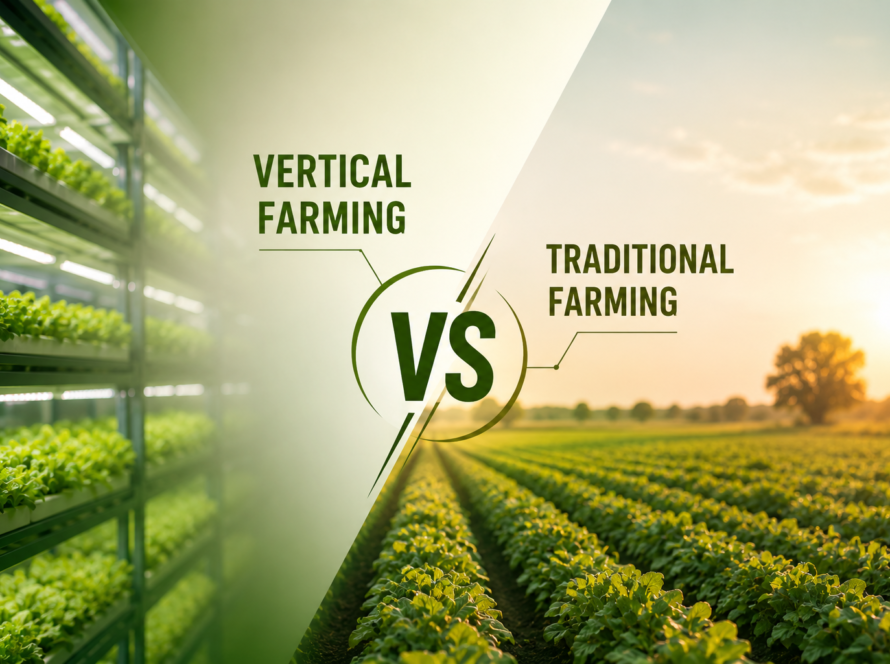
By stacking production zones, vertical farming allows making an effective use of space within a small interior area. This method may prove especially helpful if integrated into the controlled environment farming systems.
Growers would be able to plan racks, air conditioning, humidification and control systems according to particular production zones. This will allow making operations more effective while at the same time optimizing the space for production.
Learn more about vertical farming and modern cultivation and its role in modern agriculture.
How to Choose the Right Mushroom Farming Equipment
The following issues should be considered when choosing equipment for mushroom farming:
- Mushroom type: button, oyster, and specialty mushrooms may have specific conditions and requirements for cultivation.
- Farm size: the dimensions of growing and processing zones should be taken into account.
- Production capacity: larger mushroom farms may need equipment to help reduce manual labor.
- Environmental requirements: temperature, humidity, ventilation and air purity requirements should be accounted for.
- Energy costs: cooling, heating, humidification and ventilation require energy.
- Maintenance : choose equipment that is easy to clean, inspect, fix and replace.
- Scalability: some equipment may help you grow mushrooms in the future.
Equipment Required for Various Types of Mushrooms
Button Mushroom Production
For button mushroom production, controlled indoor facilities are normally used with equipment required to regulate temperature, ventilation, humidity, growing beds or racks, monitoring, and hygiene.
However, the equipment may differ according to the production system adopted in addition to the environmental needs of the farm.
Oyster Mushroom Production
In oyster mushroom production, it is possible to use the bag and rack systems. Humidity control, ventilation, racks, watering, monitoring, and hygienic handling equipment are some of the equipment that are normally considered.
Other Mushroom Varieties
Other mushroom varieties may also have different environmental preferences and methods of cultivation. This means that equipment should be chosen after considering the needs of the particular mushroom.
Common Mistakes in Choosing Equipment
One mistake that people make when choosing the equipment is buying the equipment before choosing the production process and facility design.
Growers should also be careful not to use:
- Equipment that lacks proper ventilation
- Equipment that is hard to clean
- Equipment that is not suitable for their farm sizes
- Too much automation of easy tasks
- Equipment without thinking about future development
The properly arranged system is generally more valuable than several disconnected expensive devices.
The Role of Equipment in Modern Mushroom Farming
Mushroom farming tends to become increasingly reliant on controlled environment and monitoring technologies. Equipment helps to manage conditions, organize production zones, eliminate repetitive labor, and gather information for analysis.
Technology cannot replace good cultivation techniques. On the contrary, technology makes them possible. The best combination would be an equipment that complements sanitization, monitoring, proper growing techniques, and professional farm management.
Conclusion
The selection of the proper mushroom farming equipment is one of the key elements in creating the properly organized cultivation system. Growing racks, ventilation, humidity control, monitoring, substrate preparing, and harvesting equipment should have definite production purpose.
For those interested in modern farming techniques, a combination of proper equipment and vertical farming and growing can lead to creating a better organized system of mushroom production.
Desi Fasal concentrates on organic farming supported by technology and mushroom farming. Explore the Mushroom farming business guide to learn more about modern mushroom cultivation.
FAQs
1. What equipment is needed for mushroom farming?
Minimal equipment includes growing racks, temperature and humidity monitoring system, ventilation, watering/misting system, cleaning equipment, and appropriate substrate preparation/harvesting equipment.
2. Does one need an expensive equipment for mushroom farming?
No, not necessarily. It is necessary to choose equipment based on the type of mushrooms being grown, the volume, the method of cultivation and other conditions.
3. Why is ventilation necessary in mushroom farming?
Ventilation ensures the air exchange indoors and also helps manage the conditions like CO2 level, temperature and humidity. Ventilation will vary depending on the type of mushrooms and their growth stage.
4. What equipment is used in the cultivation of oyster mushrooms?
Equipment for mushroom farming may include growing racks, humidity control system, ventilation fans, monitoring systems, watering/misting system, clean handling equipment and substrate preparation equipment.
5. Is it possible to use vertical farming in mushroom cultivation?
Yes, it is possible to do indoor vertical farming, which means that mushrooms are cultivated using multi-level racks inside.