India’s agricultural sector is undergoing a major transformation. With rising population, shrinking farmland, unpredictable weather, and increasing demand for fresh, chemical-free food, traditional farming methods are no longer enough to meet future needs. This is where vertical farming is making a significant impact. By combining modern technology with sustainable farming practices, vertical farming enables year-round crop production while using less land, less water, and fewer resources.
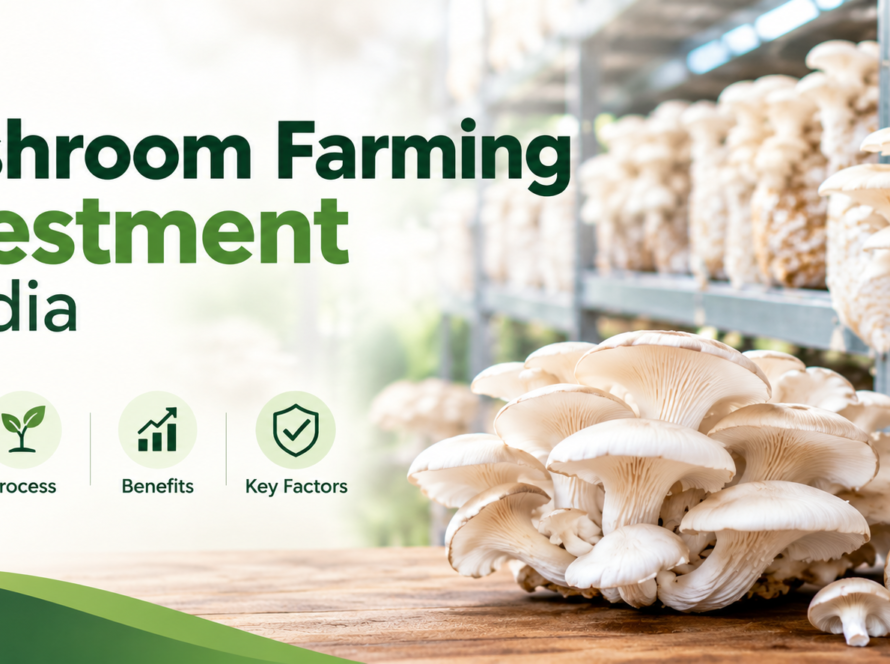
Among all the crops grown through vertical farming, mushroom farming has emerged as one of the most profitable and scalable opportunities. From button mushrooms to oyster mushrooms and medicinal varieties like Ganoderma, controlled-environment farming is helping growers achieve higher productivity and better quality.
What is Vertical Farming?
Vertical farming is an advanced agricultural technique in which crops are grown in vertically stacked layers inside climate-controlled facilities. Unlike conventional farming, which depends on soil quality and seasonal weather, vertical farming creates the ideal growing conditions using technology.
Modern vertical farms use automated systems to control temperature, humidity, airflow, lighting, and irrigation. This allows farmers to grow crops consistently throughout the year, regardless of external climate conditions. As urbanization increases and cultivable land becomes limited, vertical farming offers a practical solution for producing more food in less space.
Why is Vertical Farming Important in India?
India faces several agricultural challenges, including irregular rainfall, declining groundwater levels, labour shortages, and climate change. Vertical farming addresses these issues by significantly improving resource efficiency.
Key advantages include:
Higher crop production from smaller land areas
Up to 90% less water usage compared to traditional farming
Year-round cultivation without seasonal interruptions
Better protection against pests and diseases
Consistent crop quality and higher market value
Sustainable and environmentally friendly farming
These benefits make vertical farming one of the fastest-growing sectors in Indian agriculture.
Why Mushroom Farming is Ideal for Vertical Farming
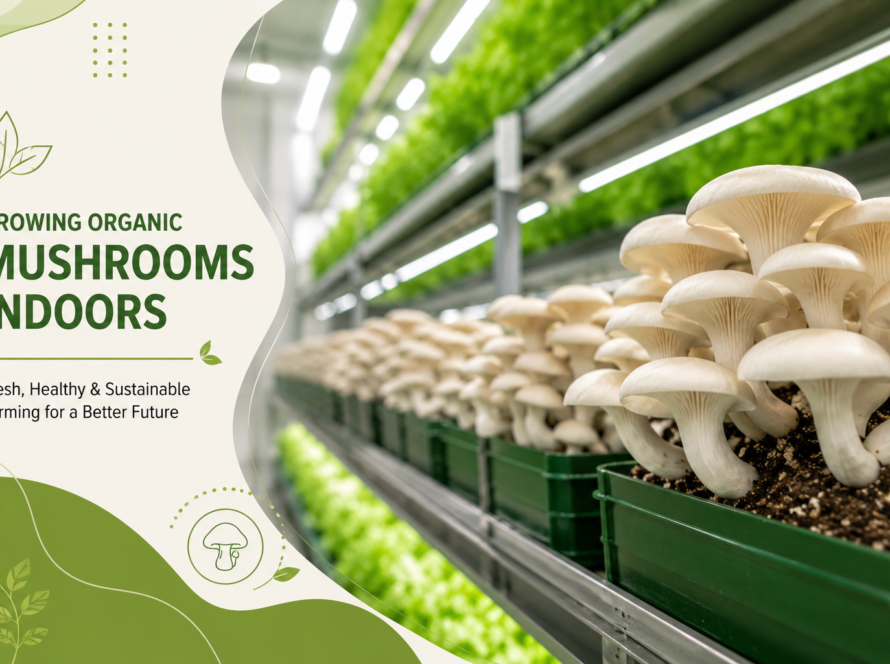
Among various crops, mushroom farming is perfectly suited for vertical farming because mushrooms naturally grow in controlled environments. They require limited sunlight, minimal land, and carefully managed humidity and temperature.
A high tech mushroom farm uses multiple vertical racks to maximize production within a compact area. This allows growers to harvest several crop cycles each year while maintaining consistent quality.
With increasing demand from restaurants, supermarkets, pharmaceutical companies, and health-conscious consumers, mushroom agriculture is becoming one of the most attractive agribusiness opportunities in India.
Conclusion
Vertical farming represents the future of sustainable agriculture in India. By combining innovation, automation, and efficient resource management, it enables farmers to produce high-quality crops throughout the year while reducing dependence on weather and large land holdings.