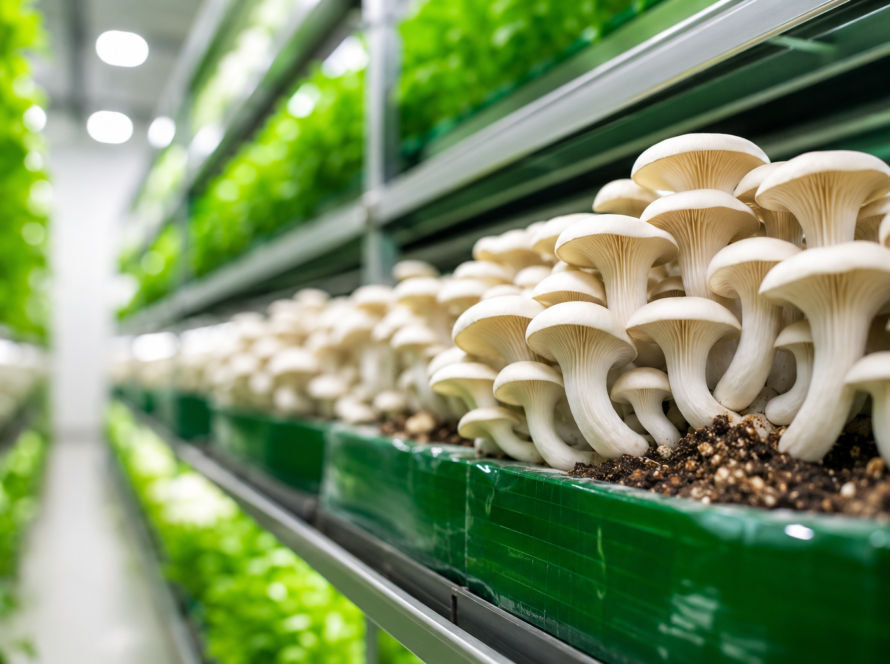
The cultivation of mushrooms becomes a more and more attractive agricultural business in India. Contrary to most crops, mushrooms can be grown in special controlled environments and do not necessarily need big areas of agricultural land. Hence, mushroom farming is an interesting alternative agricultural activity for farmers, rural entrepreneurs and everyone who wants to try their luck in alternative agricultural business.
If done right, the production of mushrooms may provide some additional income for the farm. In order to cultivate mushrooms properly, it is necessary to take into account certain features of the crop.
Understanding the Mushroom Farming Business in India
Mushroom cultivation refers to the process of growing fungi in a controlled environment and then selling the product to households, retail stores, hotels, restaurants, or any other business. Mushroom cultivation is extremely feasible in India because there are numerous species of mushrooms that can be cultivated in various parts of India depending upon the season, climate, space, and other resources.
It is not necessary for the farmer to have a huge tract of land to begin with. The process of growing mushrooms can start off in a room or unit, which will provide the farmer with the opportunity to learn the process and gradually scale it up. It can be conducted in conjunction with other kinds of farming activities like organic farming, using agricultural waste.
Why is Mushroom Farming Growing in India?
With the increase in knowledge about healthy and nutritious food options, there has been an increased interest in mushrooms being included in the kitchens of homes, restaurants, hotels, and food processing firms. The increasing demands have led to new possibilities for farmers and entrepreneurs who want to venture into the cultivation of mushrooms.
One of the greatest benefits of mushroom farming is that the process does not always need the use of extensive farmland. Mushroom farming can take place indoors using a clean room, shed, or any other area which has been made specifically suitable for growing mushrooms.
Mushroom farming can also work alongside other agricultural activities, including organic farming, especially when growers use suitable agricultural waste as substrate and follow responsible waste-management practices.
Is Mushroom Farming Suitable for Beginners?
Of course, however, it is recommended to start with a moderate scale of production and learn the cultivation process. The understanding of the temperature, humidity, cleanliness, quality of the spawn and harvesting will help maintain steady production of mushrooms.
Choosing a Suitable Variety of Mushrooms for Your Farm
Selection of a variety is the first step a farmer needs to take in order to start the production of mushrooms. Each variety has its own growing conditions and special features.
1. Oyster Mushrooms
Oyster mushrooms are often recognized as suitable for the beginners because the cultivation process can be quite simple when proper conditions are maintained. In addition, oyster mushrooms may be grown using of agricultural residues as a substrate.
2. Button Mushrooms
Button mushrooms are well known and demanded among consumers; however, the cultivation usually requires more controlled environment conditions. Farmer should know
3. Milky Mushrooms
A different type of mushroom that can be produced if there are suitable climatic conditions will be the milky mushrooms.
Factors to Consider when Choosing a Variety
The following factors have to be considered before selecting a particular variety: local climate, spawn availability, farming facilities, market demand, farming skills, and storage issues.
How to Start a Mushroom Farming Business Step by Step
Starting a business of mushroom farming involves more activities than acquiring spawn and proceeding to farming.
Selecting a Suitable Place
It is important to select a suitable location which will have water, power, good ventilation, and transport facilities. The growing room has to be suitable for the farmer to maintain the environmental conditions suitable for the particular mushroom variety.
Prepare the Room for Mushroom Cultivation
This room should be clean and well-organized with enough space for cultivation bags, racks, ventilation, and other farm activities. It is possible to use shelves and racks to take full advantage of the available space.
The principles of vertical farming can also be helpful for indoor mushroom cultivation since the growing bags or other containers can be arranged vertically to use limited floor space in a better way. This approach can make vertical farming a useful method for maximizing available cultivation space.
Arrange the Spawn and Growing Material
It is important to choose a high-quality spawn since it is important for proper mushroom growth. Farmers need to purchase spawn from a reliable supplier and use the appropriate substrates.
Prepare the Growing Substrate
Common agricultural materials can be used as substrates for certain mushroom varieties, making mushroom cultivation an interesting option to integrate with organic farming practices where appropriate. This material should be appropriately prepared and treated in order to minimize contamination risks and ensure favorable conditions for the growth.
Spawning and Incubation
After the spawning procedure, the bags or containers are kept in an appropriate environment for the colonization of the substrate with the mushroom mycelium.
Maintenance of Proper Growing Conditions
Environmental conditions, including temperature, humidity, ventilation, lighting, and cleanliness, should be observed according to the requirements of the chosen mushroom variety. Small changes in environmental conditions may influence the development of the crops; therefore, regular observation of conditions is an important component of mushroom cultivation.
Harvesting and Handling the Product
The product should be harvested at the appropriate time and with care in order to minimize any physical damage. Since fresh mushrooms have a relatively short shelf life, it is important to provide proper packaging, cooling, transportation, and marketing.
Setup for Mushroom Farming and Cost Considerations
The cost involved in cultivating mushrooms could vary greatly depending on the variety of mushrooms, scale of production, infrastructure and equipment needed, labor and other considerations. Instead of considering the fixed cost of cultivation, farmers should develop their own budget plan according to the type of production planned.
Some of the important cost considerations might include growing room, racks or shelves, spawn, substrate, water and electricity, labor, sanitation materials, packaging, transportation, and maintenance.
Starting with a smaller production system could be a good idea for new farmers to learn about the requirements of production and the market.
How Can You Improve Productivity of Your Mushroom Farm
Consistent productivity can largely depend on good management at farm level.
Maintain Suitable Temperature and Humidity Conditions
Monitoring the environment and maintaining it according to the needs of the variety of mushrooms selected is important.
Prevent Contamination of Growing Material
Hygienic growing rooms, properly sanitized equipment, quality spawn and appropriate practices could help to prevent contamination. Any contaminated growing material should be handled immediately.
Use Quality Spawn
The quality and health of spawn would provide a good basis for the whole process of cultivation. Poor quality or contaminated spawn could spoil the entire cultivation process.
Follow Good Hygiene Practices
It is important for workers to maintain hygiene while handling substrates, spawn, growing bags and mushrooms harvested. It is one of the simplest ways to prevent production problems that could have been avoided otherwise.
Marketing and Sale of Mushrooms
Production is not the only aspect of the business. It is equally important to find reliable buyers.
Farmers could consider selling in local vegetable markets, retail shops, restaurants, hotels, food industries, wholesalers or direct sales. Developing contacts with buyers could result in more predictable demand.
They could also explore processed mushroom products wherever appropriate. Before increasing the production capacity, it is wise to know the local market, preferences of customers, prices and requirements of transportation.
Challenges in Mushroom Farming
Mushroom cultivators could encounter various kinds of challenges like contamination, inappropriate temperature or humidity, pest problem, short shelf life of crops, loss of crop and variations in market demand.
The chances of these problems occurring could be minimized with proper sanitation, environmental monitoring, good quality inputs, careful harvesting and marketing plans. The farmers should maintain simple records about production to identify the recurring problems.
Tips for Establishing a Successful Mushroom Farming Business
Start with production capacity within your knowledge and resource availability. Gain understanding of the cultivation needs of the chosen variety before increasing scale.
Keep your production area clean, buy quality spawn, monitor growing conditions continuously, and produce only as many mushrooms as you can sell. Recordkeeping will also aid in decision making.
Is Mushroom Farming a Profitable Business in India?
The mushroom farming venture may be promising, but profitability is never guaranteed and shouldn’t be assessed only by production volume. It depends on various factors, including variety, yield, input cost, price, crop losses, labour, infrastructure, and access to reliable markets.
Anyone who considers this type of business needs to make appropriate plans, learn about cultivation in practice and formulate an adequate marketing strategy.
Conclusion
Mushroom farming can serve as an alternate agricultural opportunity for Indian farmers and agri-entrepreneurs. The ability of this type of agriculture to work in controlled environments, utilize appropriate agricultural products and conduct small-scale production makes it a promising agricultural choice.
Nevertheless, for successful cultivation, one will need to consider several aspects other than growing of mushrooms. Choice of the right variety, maintenance of hygiene, environmental conditions, cost control and creation of reliable markets are the main steps towards building a successful mushroom farming business.
In order to find out more about agriculture and receive valuable advice and information, DesiFasal can become a great choice for farmers and agri-entrepreneurs. With its focus on modern farming opportunities, DesiFasal can also help readers explore relevant agricultural concepts and project information.
FAQs on Mushroom Farming Business
What is the easiest mushroom to grow for beginners?
Oyster mushroom is a variety which is regarded as a good choice for beginners, as its cultivation can be easier compared to others provided the needed growing conditions are kept.
Can mushroom be grown without farm?
Yes. Mushrooms can be cultivated indoors in appropriate growing rooms or other controlled environments; thus, there is no need for huge plots of land.
Is mushroom farming suitable for small farmers?
It can be suitable for small farmers, as the production may be started on a manageable scale. Farmers still need to know the cultivation process and local market requirements.
What is the most important aspect of mushroom cultivation?
Environmental conditions and hygiene are the most important ones. Spawn quality, substrate preparation and crop management are other important points of successful production.